


Company official website
- Weichai Group


In Saudi Arabia’s logistics sector, long-distance routes, high temperatures,
and intensive vehicle utilization are part of daily operations. Under such
conditions, fuel consumption has become one of the most critical cost factors
for fleet operators. Recently, a Saudi logistics customer conducted a real-world
fuel consumption comparison between a WEICHAI LANDKING light truck and a
same-class Isuzu model, a brand widely used in the local market. The test
covered the Riyadh–Dammam route, one of the country’s most representative
long-haul corridors, with a total distance of 873 kilometers.
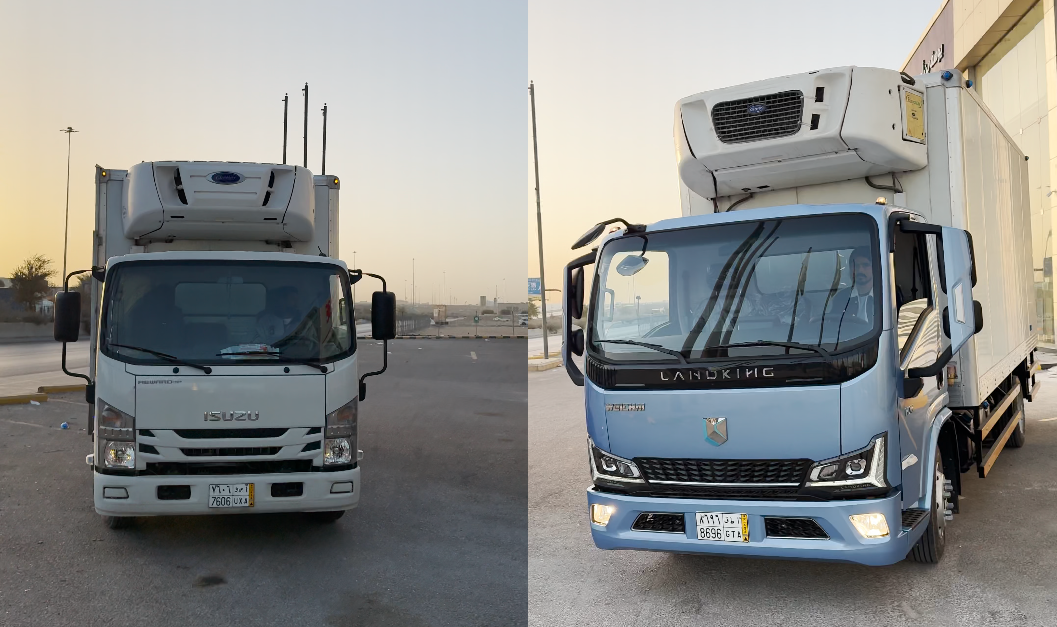
The comparison was initiated by the customer rather than the manufacturer,
driven by a practical operational question: whether the vehicle could maintain
stable performance and fuel efficiency during long-distance transport under high
load operations. To find out, the customer chose one of Saudi Arabia’s most
representative long-haul routes—from Riyadh to Dammam, covering 873 km mostly at
highway speeds—providing a real-world, high-intensity scenario to evaluate the
vehicle’s fuel consumption and reliability.
To ensure comparability, both vehicles operated on the same route, under the
same driving conditions and with identical payloads. Each truck carried 3.7 tons
of cargo, including metal components, and was equipped with a cargo box and
refrigeration unit, closely reflecting real-world logistics operations in Saudi
Arabia.
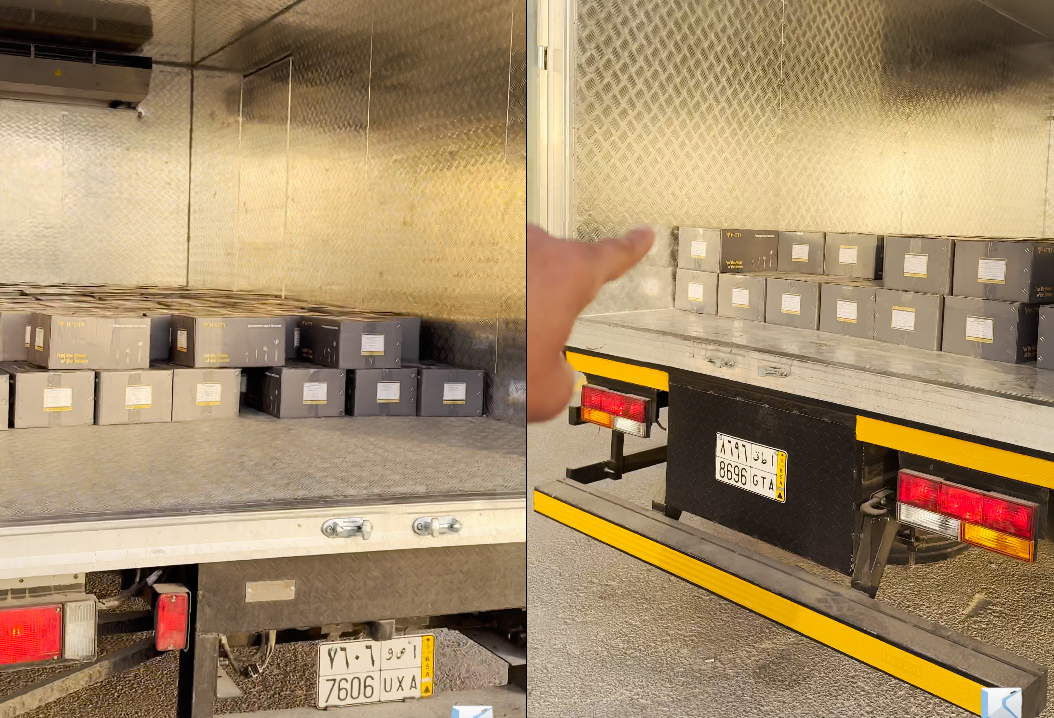
Before departure, both vehicles were fully refueled and their trip data reset
to establish the same baseline conditions.
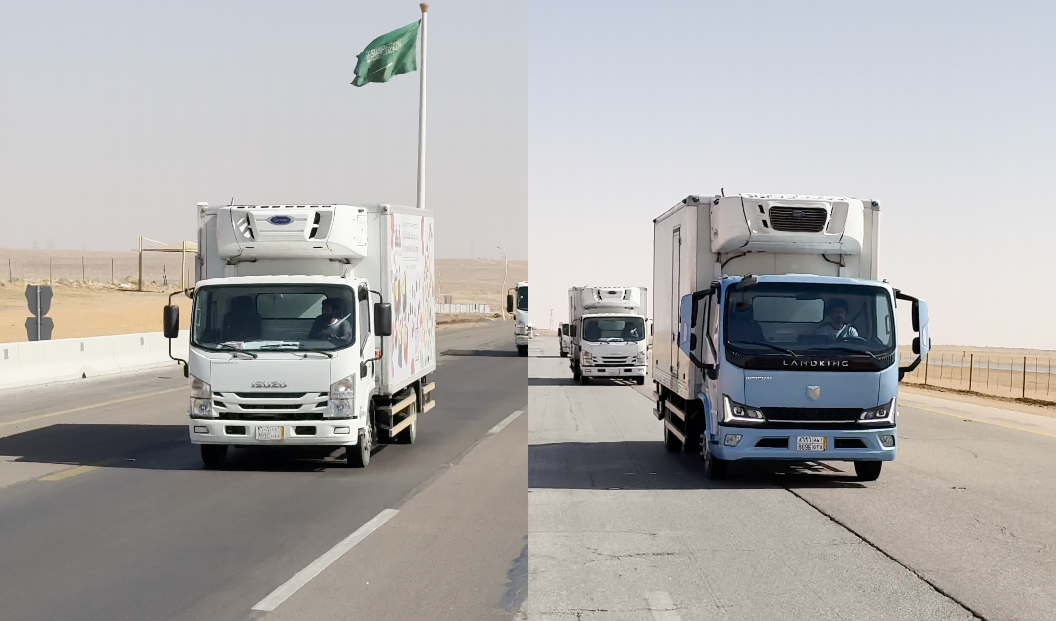
Throughout the journey, the trucks encountered typical long-haul scenarios,
including extended highway cruising, fully loaded uphill driving, and night-time
operation. Both vehicles completed the route smoothly, with stable performance
across different driving conditions.
By 3:30 PM on the test day, the WEICHAI LANDKING light truck had covered
approximately 500 kilometers on a one-way route. Despite the long distance, the
fuel tank remained largely full, highlighting the truck’s excellent fuel
management and efficiency under real-world operating conditions.
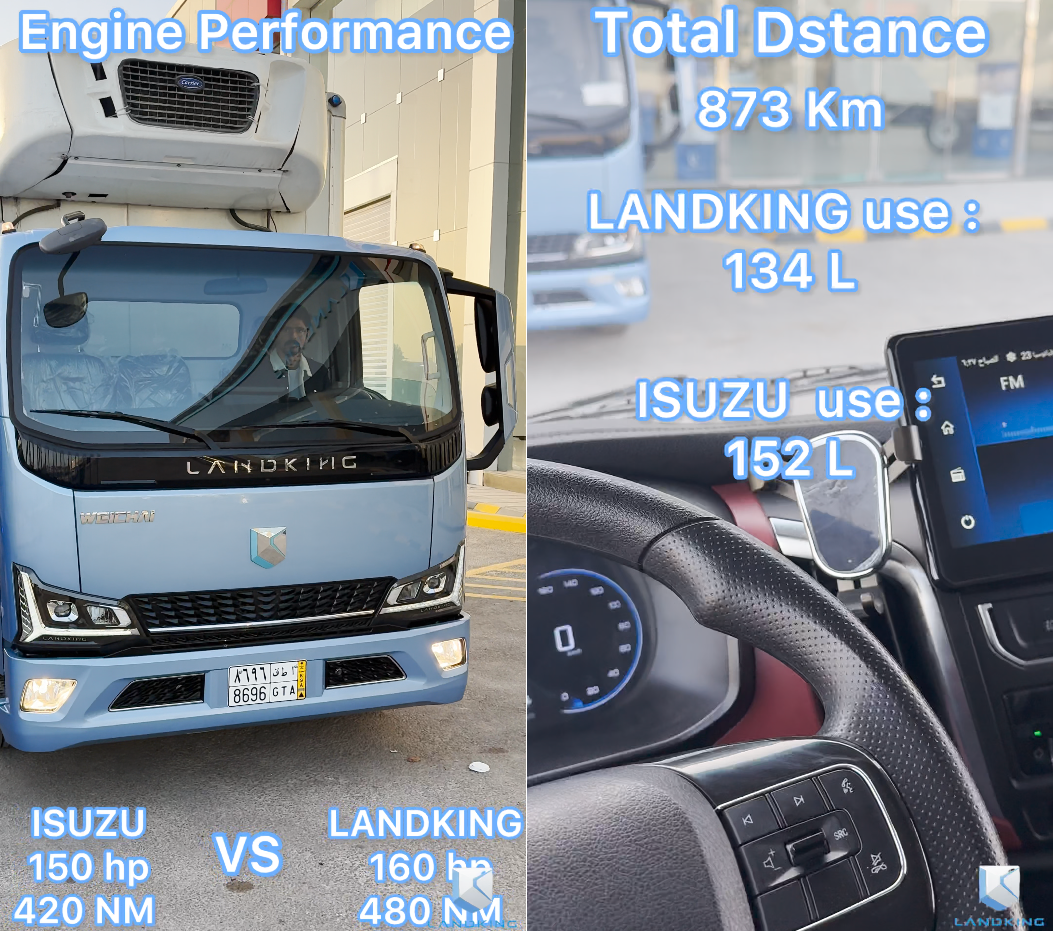
After completing the full route and returning to the starting point, fuel
consumption was calculated by refueling. The results showed that the WEICHAI
LANDKING consumed 134 liters of diesel, while the Isuzu recorded 152 liters over
the same distance. This represents a fuel saving of approximately 18 liters for
the WEICHAI vehicle under identical operating conditions. The WEICHAI truck also
demonstrated slightly higher power output, supporting consistent performance
during long-distance, heavy-load transport.
According to the customer, the fuel-saving result reflects the balance
between power delivery and fuel efficiency achieved by the WEICHAI “Golden”
powertrain, particularly in sustained, high-load operating scenarios.
The customer noted that the test offered a new perspective on Chinese
commercial vehicle brands, especially regarding fuel efficiency and operational
stability. For logistics operators running frequent long-distance routes, even
small differences in fuel consumption per trip can translate into meaningful
cost savings over time.
The Riyadh–Dammam test not only validated the real-world fuel efficiency of
the WEICHAI LANDKING under demanding conditions, but also provided a practical
reference for local logistics companies evaluating vehicles for high-intensity
operations.


